Thursday, April 28, 2022

Menhaden legislative update - 4/28

The saga to protect one of the ocean’s most valuable forage species continues this Spring in the Louisiana Legislature. CCA Louisiana, The Bonefish and Tarpon Trust, the FFI Gulf Coast Council and many other conservation groups are working in support of House Bill 1033 by Rep. Joe Orgeron. This bill would require weekly reporting of menhaden catches as well as establish limits on menhaden harvesting on a tiered distance from shore.

To understand where we are, a quick overview on this issue:

  • Menhaden (pogies) are the most important food source for redfish, speckled trout, spanish mackerel and many other predatory fish. This nutrient-rich species is also harvested commercially for a variety of uses, from dietary supplements to pet food.
  • Overharvesting of menhaden has been linked to poor condition of fish and decreased biomass of species, as well as displacement of sea birds and mammals.
  • Of equal concern is the bycatch. The methods used to harvest pogies has been documented to result in the demise of thousands of bull reds (spawning stock) as well as large numbers of spotted seatrout.
  • For these reasons, most coastal states have long banned commercial harvest within their waters, while the few states that allow it have established buffer zones (distance from shore) of at least one mile. Louisiana is the lone exception in allowing unlimited nearshore harvest.

… and a history of how we got here…

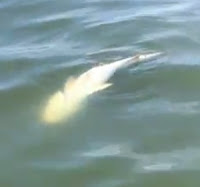
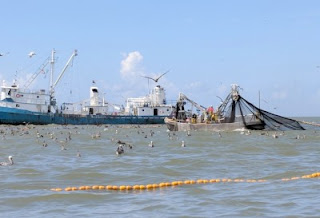
  • In 2019, video and photos surfaced in social media of menhaden vessels working just yards off the Louisiana shoreline, with dead redfish (and other sport fish) floating by the hundreds. These sparked magazine articles and outrage among anglers and other conservationists.
  • In June 2020, the Louisiana Wildlife and Fisheries Commission heard from biologists and conservationists on a proposal for a one-mile buffer zone. LWFC rejected the proposal.
  • In March 2021, conservationists took their case to the Louisiana Legislature. HB535 would have established a 1/2 mile buffer zone. While it had overwhelming support in both the House and Senate, the Senate Natural Resources Committee Chair, Bob Hengens of Abbeville – an ally of Omega Protein – did a masterful job of stalling the bill, leading to its failure to pass before the session ended.
  • In January 2021, the LWFC voted on a Notice of Intent to establish a 1/4 mile buffer zone. Apparently the LWFC came to realize that if it did not act, the legislature would again take up the issue. However, the NOI was amended to not include Breton Sound, infuriating legislative members.

So now the legislature takes up HB1033. It’s different than HB535 in that it still allows harvesting within a half-mile, but places a very restrictive quota.  HB1033 sets the following limits:

– statewide a total limit of 573 million pounds
– 150 million pounds within one mile of shore
– 229 million pounds within two miles of shore
– daily set locations for each vessel, and weekly reporting of harvests
– harvest zones will be closed once limit is reached

Meanwhile, Senator Hengens has filed a bill favoring his harvester allies. SB447 would only require weekly reporting of harvest with no other restrictions.

As of this writing, HB1033 by Rep. Orgeron has passed the House Natural Resources Committee by a 9-3 vote and has passed the House Floor by a 75-22. It now goes to the Senate Natural Resources Committee where it faces a tough fight, thanks to Sen. Hengens.

We ask all fly anglers and conservationists to contact their state representatives and senators and ask them to SUPPORT HOUSE BILL 1033.


Thursday, April 14, 2022

Learn fly fishing basics at these upcoming clinics

We all love to fly fish, but the learning curve can be quite steep if you don't have someone to help guide through the tackle, terminology, and most important, the casting basics. For those looking to get into this wonderful sport, we have several opportunities coming up where personalized hands-on instruction is available... in most cases at no cost!

Cenla Fly Fishing 101 - April 23

The Kisatchie Fly Fishers will host their 8th annual "Fly Fishing 101" on Saturday, April 23rd at Booker-Fowler Hatchery on Joan Stokes Rd in Forest Hill. Time is 8:30am to 12:30pm. There is no cost, but registration is required.

The agenda includes fly fishing overview and terminology, hands-on casting led by FFI-Certified Instructors, hands-on knots and leaders, discussion of equipment and accessories needed for fresh and inshore saltwater fishing, and different types of flies for various fish.  For complete details or to register, go to www.kisatchiefly.org and click on "FF101".

Orvis Fly Fishing 101 - April 23, May 21, May 28, June 11, June 18

The Orvis store in Baton Rouge conducts introductory fly fishing clinics throughout the year at their store at 7601 Bluebonnet. Time is 8:00am to 10:30am. Orvis FF101 is a one day, 2.5 hour clinic designed to introduce the basics of fly fishing and fly casting.  It includes hands-on rigging and casting instruction. There is NO cost, but pre-registration required as class size limited. For more info, call (225) 757-7286.  Or to register online, CLICK HERE.

Acadiana Fly Fishing 101 - Date TBA

The Acadiana Fly Rodders of Lafayette are planning to hold a "Fly Fishing 101" clinic later this year (early September appears likely). The format will be very similiar to the one conducted by the Kisatchie club as described above.  Keep checking their website at www.acadianaflyrodders.org for 

Monday, April 04, 2022

F3T coming to Lafayette this Saturday

2022 Fly Fishing Film Tour & Hangout
Saturday, April 9, 2022

Pack & Paddle
601 E. Pinhook Rd, Lafayette, LA

3:00pm - hangout starts
5:00pm - films showing
Tickets $20

Pack & Paddle in Lafayette will again host their annual showing of the Fly Fishing Film Tour (F3T) along with their popular "Fly Fishing Hangout" prior to starting the films. Tickets are $20 in advance and at the door (if not sold out already).

The Hangout will feature fly tying demos, casting games, snacks and beer, and more. Many of the top fly anglers from across south and central Louisiana will be on hand for those looking for a little advise.

The films will kick off between 5 and 5:30. These collection of short films run the gamut from coldwater steelhead to jungle streams of aggressive fish, to personal stories of inspiration, to conservation issues and victories. If you've not been to an F3T event in recent years, it's a far better production than the early days of primitive filmmaking and anglers yelling "boo-yah" into the camera after every catch (there's an occasional boo-yah left, but you can count on one finger).

For tickets, go to www.packpaddle.com  or call 337.232.5854.

Monday, March 14, 2022

LWFC proposes closed season for flounder

At the March meeting of the Louisiana Wildlife and Fisheries Commission meeting, the body adopted a Notice of Intent (NOI) to set an annual closed season for the recreational and commercial harvest of Southern Flounder from October 15th through November 30th of each year. The purpose of the NOI is aid in the recovery of stocks which have seriously declined in state waters over the past decade.

The problem is not unique to Louisiana. Throughout their range - from North Carolina to south Texas - Southern Flounder have declined steeply in numbers. As a result, almost every state has adopted a closed season in late fall. This is the period in which flounder migrate to the sea to spawn. In doing so, they often congregate making them easy targets for harvest.

It's not a problem of overfishing as much as low spawning recruitment. According to various studies, flounder born with XY chromosomes can determine their sex after they're born and when they're between 30 and 65 millimeters in length. These juveniles are becoming increasingly more masculine, with very few females left for future recruitment.

A study by researchers at LSU reported that the cause may be related to warmer water temperatures. There is a certain critical water temperature, that above that temperature, these tiny flounder are much more likely to become males. That's because - under environmental stress - males function better than females. They use less energy during their lifespan for growth and reproduction.  Males seldom grow over 14 inches in length, while females can get up to 28 inches.

Some states are attacking the problem from two sides. For example, Alabama not only has a closed season but they are stocking juvenile flounder raised in hatcheries where the water temperature is ideal for 50/50 sexual orientation. This will lead to a much faster recovery than closed season alone. 

The public can submit comments relative to the proposed rule to Jason Adriance, Fisheries Division, Department of Wildlife and Fisheries, P.O. Box 98000, Baton Rouge, LA 70898-9000 or via email to jadriance@wlf.la.gov prior to noon on May 2, 2022.

Tuesday, March 01, 2022

Bob Tabbert, a leader in casting & conservation, passes

On February 23rd, Louisiana lost one of its great contributors to our sport when Robert "Bob" Tabbert passed away. Bob was 93 years old. Born in Ripon, Wisconsin, his job as a geologist took him to south Louisiana where he embraced the lifestyle. After retirement, he became a seasonal summer resident of his native state, living in a cabin in northern Wisconsin chasing his beloved brook trout. The rest of the year he lived in Lafayette, where he was a longtime active member and board director for the Acadiana Fly Rodders club.  

Bob had many interests, but his passions were fly fishing and conservation. In the Federation of Fly Fishers (now Fly Fishers International) he found an avenue for combining both. A longtime FFF member, in 2000, he and a few other members helped rebuild the FFF Conservation Committee and establish new goals and direction. He served many years on the FFI Conservation Committee, and more recently as the Committee's Senior Advisor.  He worked on the FFF's native fish conservation projects and chaired their Coldwater Committee. He also served as vice-president of conservation for both the Southern Council and the Gulf Coast Council after its formation in 2006.

In 2012, he was awarded the "FFI Conservation Award" for extraordinary contributions to the conservation of fisheries resources. He was also awarded the Don Harger Memorial Award for outstanding contributions to fly fishing.

In addition to his contributions as a conservationist were his contributions to fly casting. Bob was one of the first FFF Certified Casting Instructors in the state, and one of its first Master Certified Instructors. He also served a stint as Casting Director for the FFF Gulf Coast Council.  He helped organize several casting clinics for the Acadiana club, and directed casting activities for their annual conclave.

In 2019, Bob wrote a book "The Great Depression & Alaska Fly Fishing", a collection of stories from his youth growing up in central Wisconsin during the Depression. The second half of the book is about his time in Alaska working as a geologist. Both segments of his life are intertwined with his love of fly fishing.

Bob's wife, Phyllis, passed away in March of last year. They are survived by their children, Lori and Matthew, and a string of grandchildren and great grandchildren.
 

Tuesday, February 22, 2022

Make plans for Red Stick Day March 5th

27th annual Red Stick Day fly fishing festival
Saturday, March 5, 2022

8:30am to 2:30pm
LDWF Waddill Outdoor Education Center
4141 North Flannery Rd, Baton Rouge, LA

Hosted by the Red Stick Fly Fishers, Red Stick Day is the longest-running fly fishing festival (aka, club conclave) in our state. There's seminars, fly tying demonstrations, casting instruction, loads of raffle items, and more.  And best of all, admission is free!

The event will again be held at the LDWF Waddill Outdoors Education Center off North Flannery Road.  The ponds on the premises are full of big bass and bluegill.  In addition, Masseys Outfitters will be on hand with a variety of kayaks from Hobie, Native and other brands for folks to test paddle/pedal.

The programs range from kayak fishing the marsh, bass on the fly, fly fishing southwest Louisiana, and details about a nationwide mixed bag fly fishing contest.  Roughly a dozen of the region's top fly tiers will also be on hand to demonstrate their various flies, along with their favorite legacy patterns. There will also be casting instruction from regional FFI Certified Casting Instructors.

There's also a giant raffle and silent auction featuring one-of-a-kind items, all to benefit the club's educational projects.

Details about the event, including speaker and tier bios, schedule of activities, and more can be found by going to www.rsff.org and clicking on "Red Stick Day" in the menu.

Thursday, February 17, 2022

Conservationists asked to comment on Menhaden

In January, the Louisiana Wildlife and Fisheries Commission sought to establish a regulation to create a 1/4 mile menhaden (pogey) harvest buffer zone. This means that no industrialized harvest would take place closer than 1/4 mile from the defined shoreline of Louisiana.  Since an amendment was added to the original Notice of Intent - the amendment would exclude Breton Sound from the buffer - the NOI had to be reintroduced for public comment before a final vote can be taken.

CCA Louisiana, the Louisiana Charter Boat Association, the Theodore Roosevelt Conservation Partnership, the FFI Gulf Coast Council, and other conservation partners are vehemently opposed to the 1/4 mile buffer because it is woefully inadequate. NO OTHER STATE allows menhaden harvest less than one mile from shore, and most states don't even allow it within state waters. 

Most inshore species spawn within the littoral zone, there are greater concentrations of menhaden within this zone, and these fish (reds, specks, mackerel, etc) depend on these higher concentrations of pogies for nutrition.  Equally of concern.. there have been several documented large fish kills of spawning redfish and trout as the result of pogey harvesting bycatch within several hundred yards of beaches and passes.

The conservation groups are asking the Commission to reject the current Notice of Intent, and instead implement a statewide buffer - including Breton Sound - of at least 1/2 mile. While a one-mile buffer would be much better, the 1/2-mile buffer was the original compromise before some supporters of the menhaden industry backed away.

On Tuesday, February 22, at 5:30 pm, there will be a public meeting at the Joe Herring Louisiana Room of the LDWF Headquarters at 2000 Quail Drive in Baton Rouge. Attendees can express their concerns at the meeting.

If you cannot attend in person, then please send your public comments asap to comments@wlf.la.gov.  These comments need to be received by February 22nd.

CCA is also asking their members and other conservationists to copy their local legislators.  You can find them using this link: Legislators - Louisiana State Legislature.

Friday, January 28, 2022

Rainbeaux trout are back!

Each winter, nearly two dozen ponds across Louisiana are stocked with rainbow trout. Some of the stockings are by local agencies. For example, ponds in East Baton Rouge Parish are stocked by Baton Rouge Recreation (BREC) and in Ascension Parish by the AP Police Jury. Most other ponds are stocked by Louisiana Department of Wildlife and Fisheries under their "Get Out and Fish" community fishing program.

Earlier this month, EBR and Ascension parishes conducted their stockings. Yesterday, LDWF stocked the following public ponds: Parc Natchitoches, Purple Heart Memorial Park (Ragley), Fort Randolph (Pineville), William Polk Park (Vidalia), Kiroli Park (Monroe), Elmore Mayfield Park (Ruston), Grambling City Park, and Turners Pond (Minden).

Next week, LDWF will stock: I-10 Park (Jennings), Girard Park (Lafayette), Southside Regional Park (Youngsville), Bayou Country Sports Park (Houma), Joe Brown Park (New Orleans), Burbank Pond (Baton Rouge), Sidney Hutchinson (Walker), Zemurray Park (Hammond), Bogue Chitto State Park.

Even though trout are not regulated by LDWF, you do need to have a Louisiana fishing license.  All fish must be caught on legal recreational tackle (rod and reel, fly tackle or cane pole).

The concept is to give the public good fishing at a time when native species like bass and bream are sluggish. These ponds have good bank fishing, which allows a segment of the population to enjoy good fishing. Most of the stocked fish are between 10 and 12 inches, but each pond will have several up to 16 inches to give anglers the opportunity for a bigger fish.

For fly anglers, all that is needed is a 5-weight outfit. However, for those with an ultralight outfit (3-weight or lower), the fun factor is amplified!

Regarding flies. The first couple of weeks the fish are opportunistic. An olive or black woolybugger will work best, along with a few nymphs such as Prince Nymph, Copper Johns, Hares Ears, and San Juan Worms. Once the trout have acclimated to their environment, dry flies work very well late in the day.   

Friday, January 21, 2022

Fly fishing events highlight Spring calendar

Based on the number of events for Spring 2022, its clear that Omicron variant of Covid-19 isn't scaring anyone from getting back to some semblence of normal.  And we couldn't be happier!

When it comes to fly fishing, Spring is event season across the deep South. These events can vary in type from large commercial expos like the Atlanta Fly Fishing Show to club festivals like "Red Stick Day" to fly fishing tournaments like the “Fly Fishin For The Mission” to hybrid events like the “Sweetwater Classic” to purely educational events like “Fly Fishing 101” hosted by the Kisatchie Fly Fishers.

Here is a list of Spring 2022 events either in Louisiana or within a days drive from a population area inside our state.

Jan. 29 (Sat) – 4th biennial CENLA FLY FISHING & LIGHT TACKLE FESTIVAL, Kees Park Center, Highway 28 East, Pineville, LA. 8:30am – 3:30pm. Free admission. Presentations, fly tying demos, casting clinics, exhibitors and more. $5 lunch available. Benefits Food Bank of Central Louisiana. Hosted by Kisatchie Fly Fishers club. Website: www.kisatchiefly.org.

Feb. 4-5 (Fri-Sat) – ATLANTA FLY FISHING SHOW, Infinite Energy Center, 6400 Sugarloaf Pkwy, Duluth, GA. 9am – 6pm. Admission $15/$25, military $10. Largest fly fishing show in the South. FFI will host the Learning Center, with casting and fly tying instruction free to show attendees. Website: www.flyfishingshow.com.

Feb. 12 (Sat) – 29th annual Dr. ED RIZZOLO FLY TYING FESTIVAL, Trini Mendenhall Community Center, 1414 Wirt Rd, Houston, TX. 8:30am – 4:30pm. The largest fly tying event on the Gulf Coast features over 80 tiers as well as seminars and vendors. Featured guest tier: Jerry Coviello. Adults $10, students and seniors $5, children free. Hosted by the Texas Fly Fishers club. Website: texasflyfishers.org.

Feb. 26-27 (Sat-Sun) – 5th annual TEXAS FLY FISHING & BREW FESTIVAL, Mesquite Convention Center, Mesquite, TX. Nationally known fly fishing authors, professional guides, expert casters, fly tiers from across the country, dozens of exhibitors. Microbrew sampling. Website: txflyfishingfestival.org.

Mar. 5 (Sat) – 26th Annual RED STICK DAY, Waddill Outdoor Education Center, 4142 N Flannery Rd, Baton Rouge, LA. 8:30am – 3:30pm. Free admission. Seminars, tying demos, kayak demos, casting clinics, food, refreshments. Hosted by Red Stick Fly Fishers. Website: www.rsff.org.

Mar. 11-12 (Fri-Sat) – 2nd annual SWEETWATER CLASSIC, Percy Quin State Park, McComb, MS. Free admission, bass tournament entry $30. Fly tying demos, casting clinics, seminars, raffles, Big Bream Contest (free), CPR big bass tournament with categories for boat/kayak and bank fishing, plus Slab Master (largest crappie). Hosted by FFI Gulf Coast Council. Website: www.ffigcc.org.

Mar. 24-26 – 25th annual SOWBUG ROUNDUP, Baxter County Fairgrounds, Mountain Home, AR. 9am – 4pm, each day. Admission $10 for all 3 days, adults with kids under 12 free. Largest fly tying event in the country, over 150 tiers. Seminars, fly tying clinics, vendors. Special guests Dave & Emily Whitlock. Hosted by North Arkansas Fly Fishers. Website: www.sowbugroundup.org.

Mar. 26 (Sat) – 73rd annual NEW ORLEANS CITY PARK FISHTIVAL & BIG BASS RODEO, New Orleans City Park, New Orleans. 6:30am – noon. Fishtival free, Rodeo entry fees: adults $10, kids $5. Fly Fishing category. Also fly casting and fly tying by New Orleans Fly Fishers Club. Hosted by LA Department of Wildlife and Fisheries. Website: www.neworleanscitypark.com/big-bass-fishing-rodeo-and-fishtival

Apr 29 (Sat) – FLY FISHING 101, Booker-Fowler Fish Hatchery, Forest Hill, LA. 8:30am to 12:30pm.  Free to the public, pre-registration required, limited seats. Basics of fly fishing and casting with hands-on instruction. Hosted by Kisatchie Fly Fishers. Website: www.kisatchiefly.org.

May 4-5 (Fri-Sat) – 13th Annual BASS ON THE FLY TOURNAMENT, Lake Fork Marina, Lake Fork, TX. Free admission, tournament entry fee $70. Free casting clinics, kayak demos, casting contests, Sunfish Tourney ($5), CPR bass tournament has categories for boat, kayak. Entry fee entitles participants to door prize drawings. Charitable event is endorsed by the Texas FFI Council. Website: www.bassonthefly.org.

June TBA – 2nd annual BIKES & BUGS, Gulf State Park, Gulf Shores, AL.  8:00am to 1:00pm.  No cost, but registration requested.  Anglers will pedal and fly fish their way around the park’s Lake Shelby in pursuit of bass, bream, and anything else that bites.  Open to all lady anglers, equipment and bikes available for use.  Hosted by FFI Women Connect and FFI Gulf Coast Council.  Website: www.ffigcc.org.

June TBA – 10th annual CEDAR LAKE FLY FISHING TOURNAMENT, 12056 Cedar Lake Rd, Biloxi, MS. 6:00am to noon. Registration fee $25. A bluegill tournament, flies and fly tackle only. Sign-in required on morning of tournament. Hosted by Mississippi Coast Fly Fishers. Website: www.gcflyfishers.org.

As always, please continue to check our Calendar page for more details on each of these events, and for any new events that may come up.

Monday, January 03, 2022

LWFC Commission to vote on menhaden regulation

This Thursday, January 6th, the Louisiana Wildlife and Fisheries Commission will vote on a proposal to enact a 1/4 mile buffer zone for menhaden harvest.  According to its author, the intent of the regulation is to avoid user conflict between recreational anglers and commercial pogey boats.

CCA Louisiana, Theodore Roosevelt Conservation Partnership, Bonefish & Tarpon Trust and other conservation groups point out this proposal was put forward by the menhaden industry itself and is unacceptable. The overwhelming majority of spawning of inshore and nearshore species takes place in the littoral zone, which in Louisiana is at least a mile out or more.  In addition, this area contains greater concentrations of menhaden – needed for the high protein requirements of spawning fish.  

While all parties would much prefer a one-mile buffer, the Commission is highly unlikely to accept that wide a buffer.  For that reason, they are asking for an amendment for a 1/2-mile buffer.

CCA and the FFI Gulf Coast Council are asking their members and other conservationists to petition the Commission to amend the Notice of Intent (NOI) to a minimum of 1/2 mile. To do so, email your comments to comments@wlf.la.gov before Wednesday at 2pm. You may also make your comments on Thursday, 9:30am at LDWF Headquarters in Baton Rouge.

Tuesday, October 26, 2021

Fly fishing featured in Louisiana Conservationist magazine

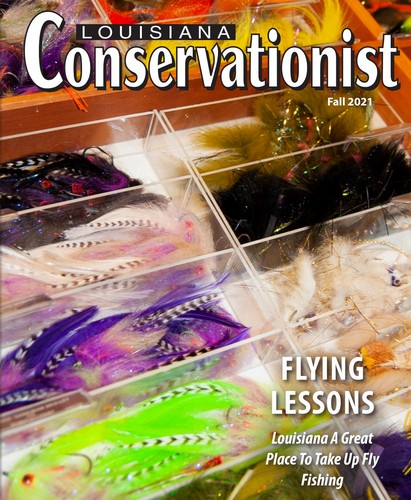
The featured article in the Fall 2021 issue of Louisiana Conservationist magazine is on fly fishing, with emphasis on the sport within the state. Writer Sherry Morton interviewed Alex Beane, manager of the Orvis store in Baton Rouge, John Williams, owner of Pack and Paddle in Lafayette, expert fly angler Ben Roussel of Baton Rouge and renown fly tier Kyle Moppert, also of Baton Rouge.  The article also featured flies tied by nationally recognized popping bug guru Ron Braud of Prarieville.

The article details the fly fishing opportunities here in Louisiana, from freshwater to the coastal marshes for sightcasting to redfish. Alex and John also discuss the several avenues for learning and growing knowledge in the sport - from the beginner classes their stores offer to the various clubs around the state. As Roussel points out, "Clubs build a community of like minded people" all interested in the sport, and offer monthly fly tying, events, trips, sharing reports and more. Some of the annual events in the state were also mentioned, including the annual "Rendezvous" held the first full weekend of November at North Toledo Bend State Park.

For anyone interested in a brief summary of what fly fishing opportunities in Louisiana exist, this article hits the nail on the head.  The magazine is available online (at no cost) by CLICKING HERE.

Thursday, October 14, 2021

Johnson's chain pickerel recognized as FFOY

At their annual convention last night, the Louisiana Outdoor Writers Association recognized the "Fish of the Year" in both conventional and fly fishing categories.  This year's recipient in the fly fishing category was Jim Johnson for his 1.64 lb Chain Pickerel caught in Cocodrie Lake out of Forest Hill.  Bradley Cole Thurman of Meadow Lakes, TX, received the "Rod and Reel" honor with a 106.20 lb Black Grouper caught out of Port Fourchon.  Both fish are new state records.

Jim is a board member of the Kisatchie Fly Fishers of Alexandria, and a member of their Fly Tying Committee. He loves tying streamers which are effective for bass as well as other predatory species such as pickerel.

Jim says he's caught bigger "grass pike" but decided to enter this one to familiarize himself with the new LOWA record registration process. His fish eclipsed the previous 1.27 lb record held by Ardes Johnson since 2002. The overall state record for chain pickerel is 5.75 lbs taken by Chris Marien on Kincaid Lake in 1977.

Since the 1940s, LOWA has curated the state fish records, maintaining the top 10 catches by weight of each species, fresh and saltwater. In the 1980s, under the guidance of Pete Cooper, Jr. and Bob Dennie, the Fly Fish Division was added.

Fly anglers who believe they've landed a trophy-sized fish (or for some species, even a decent sized fish) should check the LOWA Fish Records website.  Registration can be printed and mailed, or filled in online. Registration fee is $25.

Monday, October 11, 2021

LWFC adopts (weak) menhaden harvest buffer zone

Last Thursday at their monthly meeting, the Louisiana Wildlife and Fisheries Commission adopted a Notice of Intent (NOI) to add coastal buffer zones to Gulf menhaden harvest regulations.  The proposed changes would implement a coastwide buffer for commercial harvest of one quarter-mile (¼) mile offshore, with 1 mile buffers off Elmers to Fourchon and off Grand Terre, and a 3 mile buffer off Grand Isle.

Days before the meeting - shortly after this item was added to the agenda - a coalition of conservation groups led by CCA Louisiana, Louisiana Charter Boat Association, American Sportfishing Association, Theodore Roosevelt Conservation Partnership and others issued a response in opposition to the proposal.  In a letter to the LWFC Chairperson, they stated, “Our coalition believes that a quarter-mile buffer zone is insufficient to adequately protect Louisiana’s wildlife and other fish resources from the substantial damage inflicted to the local ecosystem by industrial menhaden or pogie harvesting.”.  Later, the Fly Fishers International Gulf Coast Council announced it's opposition to the NOI, stating that "such a ridiculously small buffer zone desecrates the intent of marine conservation".

Last summer, videos and photos of hundreds of dead bull redfish (spawners) resulting from menhaden bycatch made social media and were later featured in outdoor magazines, drawing national attention and outrage from anglers and other conservationists. Nearly all this bycatch occurred within a mile – sometimes just yards – off beaches. Louisiana is the only state that does not have a buffer zone for menhaden harvest.

This past Spring, conservation groups attempted to pass a bill that would create a buffer zone. Although all groups (including the FFI Gulf Coast Council) supported a one-mile zone,, House Bill 535 ended up being a compromise with a 1/2 mile zone, with wider exclusions for Grand Isle and Grand Terre.  The bill sailed through the House, but some political maneuvering by the Senate Natural Resources Committee Chairman forced the bill to go into reconciliation just hours before the end of the session. The bill died in limbo. Conservation groups vowed to bring a similar bill back in 2022, but without the compromise.

Concerned anglers and other conservationists are being asked to submit comments relative to the proposed rule to Jason Adriance, Fisheries Division, Department of Wildlife and Fisheries, P.O. Box 98000, Baton Rouge, LA 70898-9000 or via email to  jadriance@wlf.la.gov  before Thursday, December  2, 2021.

Sunday, September 12, 2021

Toledo Bend Rendezvous cancelled

For the second year in a row, Toledo Bend Rendezvous has been cancelled due to Covid-19 concerns. According to organizer Walter McLendon, the high number of cases in Texas and Louisiana was of great concern to having an event where folks are in close contact indoors.   Typically held the first full weekend of November at Toledo Bend State Park near Zwolle, Rendezvous is the largest casual weekend gathering of fly tiers in the country, with a long history of fly tying, fly casting, food and fishing, with only a minimal fee to cover lodging and meals.

Thursday, September 02, 2021

Hurricane Ida aftermath: long road to recovery

This past Sunday, Hurricane Ida made landfall near Port Fourchon, Louisiana, with sustained winds of 150 mph, and reported gusts as high as 172 mph. As such, it tied last year’s Hurricane Laura which hit Cameron, Louisiana, as the second most intense storm to hit the state, only behind Hurricane Katrina. And the 5th most intense storm to ever hit the United States.

Over the next 24 hours, Ida moved slowly northward bringing destruction in the form of wind damage, tidal surges, and flash flooding to parts of southeast Louisiana, southern Mississippi and even as far east as the Alabama coast. Over one million homes and businesses were without electricity, and an estimated $15 billion in property damage.

Depending on location, it will take weeks to months, but we’ll build back and hopefully, better.  And when we’re done building back, we’ll want to turn our attention to things we enjoy the most, like fishing. Except there may not be much to offer there. 

It'll take a couple weeks to determine if Ida - like Hurricanes Andrew and Gustav which followed a similiar course - have triggered massive fish kills across south central and southeast Louisiana.  Major hurricanes cause hypoxia in waters by a combination of wind-stirred organics, litterfall (leaves stripped from trees that consume oxygen upon decay), and backwater flooding. When the water recedes, it’s often dark tannic and with zero oxygen. Water temperatures in August are simply too high to overcome litterfall like they are in October and November. Fish require at least 2.0 mg/L oxygen. After Gustav, it was rare to find any water greater than 1.0 mg/L.

While hurricane-generated fish kills in saltwater are extremely rare, the problem for salt anglers will be infrastructure. Just about everything past a protection levee was damaged or destroyed, including stores, motels, bait shops… even the roads themselves.  The photos of Leeville above - before and after Ida - are typical of what happened to other coastal communities outside the protection levees.  Many business owners have already indicated they will not rebuild.

Thursday, August 19, 2021

Events cancelled due to Covid concerns

With the recent spike in the number of Coronavirus cases, and in an effort to insure the safe health of all involved, a number of clubs, FFI councils, and other groups and agencies have cancelled events scheduled for the next few months.  Some of these had been rescheduled from early Spring due to the last spike in January.. They will next be held on their traditional dates in 2022.

In addition, several club meetings are on hold until further notice. However, those clubs using Zoom will continue to meet online.

* Note: the FFI Gulf Coast Council has a Zoom Pro account available to their member clubs for their use. Assistance is also available. *

Here is a rundown of cancelled 2021 Fall events, and tentative 2022 dates.
  • Gulf Coast Sweetwater Classic – hosted by the FFI Gulf Coast Council. Next date: March 11-12, 2022.
  • FFI Southern Fly Fishing Fair – hosted by FFI Southern Council. Next date: September 29-October 1, 2022 (tentative).
  • Florida Fly Fishing Expo – hosted by FFI Florida Council. Next date: Spring 2022.
  • National Hunting & Fishing Day – hosted by the Louisiana Department of Wildlife and Fisheries at four venues across the state, the 4th Saturday in September. Next date: September 24, 2022.
  • Rio Grande Fly Fishing Rodeo – hosted by the New Orleans Fly Fishers. Next date: October 1, 2022.
  • Red Stick Day – fly fishing festival hosted by Red Stick Fly Fishers of Baton Rouge. Next date: Saturday, March 5, 2022.
  • Toledo Bend Rendezvous – public weekend retreat for fly tiers set for first weekend in November. Cancelation pending no cancel fee. Next date: November 4-6, 2022.
One event that will not be cancelled is the Fly Fishers International Virtual Expo. While official dates are November 5-7, there are a number of workshops, auctions, and other activities tied to the Expo occurring in the weeks ahead. For complete schedule, go to www.flyfishersinternational.org/Virtual-Expo/Activities

Saturday, June 26, 2021

Toledo Bend Rendezvous returns Nov. 5-7

Toledo Bend Rendezvous
Friday-Sunday, November 5-7, 2021
North Toledo Bend State Park, Zwolle, LA

After cancellation last year due to Covid-19 protocols, Rendezvous is back.  The announcement was made recently by event organizer Walter McLendan.  What  is Rendezvous?  For 32 years each Fall,  fly tiers and other fly fishing enthusiasts from across several states – along with their families – gather for a weekend of fly tying, fly casting, food and fishing. With only a minimal fee to cover lodging and meals. The event is open to everyone.

The excellent facilities at North Toledo Bend State Park are ideal for a Fall weekend fly tying retreat. Activities take place at the park’s group facility, which features a commercial kitchen and dining hall, and lodging available for up to 150 people in 5 heated log bunkhouses (30 beds each). There’s also a heated central shower and restroom building with nice night lighting on all the sidewalks.

Rendezvous continues to be a gathering for some of the top fly tiers in the country, most of whom have been featured at regional and national expos.  There are no organized activities.  Whether you come to tie, or come to watch and learn, or just partake the great scenery, fishing and on-the-water location, you’ll be glad you came!

The FFI Gulf Coast and Texas Councils, along along with several member clubs, are co-sponsors of this event, and make it possible for attendees to enjoy a low lodging rate.

Fees (family or individual are the same):

  • $40 for weekend, includes lodging and meals
  • $20 one night, includes lodging and meals
  • $10 just for the day
For more info, go to http://flycasting.bravesites.com

Friday, June 11, 2021

2021 Legislative Summary: one big win, one big loss

Yesterday the 2021 Louisiana Legislative session came to an end. And so did any hopes of passing HB535, the bill to create a nearshore exclusion zone for menhaden harvest along the coast.

As mentioned previously, the House rejected the Senate amendments and subsequently, a conference committee was formed to work out a compromise. Among the six legislators in that group was Bob Hengens, the Senate Natural Resources Committee Chairman that worked to derail the bill. With only hours to work out differences, the group was unable to reach agreement before the session ended.

Commercial fishing interests also fought hard to derail HB691, a bill to restructure fishing and hunting licenses and fees, and in most cases, bring them up to the Southern average. That bill needed a two-thirds vote of both House and Senate to ratify several amendments made in each chamber, but it did so with only hours to go. Expect Governor Edwards to sign this bill into law. This bill was greatly needed to help defray LDWF budget deficits as the result of loss of oil and gas revenues, and without having an increase in 20 years, the cost of inflation.

The fight to create an exclusion zone for menhaden is far from over just because of one defeat. Public sentiment and science are too strong to let this continue. What action will be taken next remains to be seen.

Wednesday, June 02, 2021

Free Fishing Days, 2021-22 licenses now available

Each year, wildlife agencies in each state designate "Free Fishing Days" for the public to fish recreationally in public waters without a fishing license. These events are part of National Fishing and Boating Week, which runs June 5-13, 2021.

This year, Louisiana's free fishing days are Saturday and Sunday, June 12 & 13.

It should be noted that while there is no cost (license) required to fish on these days, certain species or types of fishing may still require a permit. For example, a Recreational Offshore Landing Permit (ROLP) is required to possess tunas, billfish, swordfish, amberjacks, groupers, snappers, hinds, cobia, wahoo, and dolphinfish in Louisiana waters. 

Speaking of licenses... Louisiana annual fishing licenses for 2020-2021 expire June 30th at midnight, after which you'll need a 2021-2022 license. The new licenses became available on June 1st, and are good from the time of purchase thru June 30 of 2022.

Licenses can be purchased online at https://la-web.s3licensing.com, or at local license vendors.   Acceptable online methods of payment are Visa, Mastercard, and Discover.

Tuesday, June 01, 2021

Bissett named new AFFTA Executive Director

This past Thursday, the American Fly Fishing Trade Association (AFFTA) announced Capt. Lucas Bissett of Slidell, Louisiana, as their new Executive Director. Lucas has been an AFFTA board member for the past four years, the last three as a member of the executive committee.

Lucas is owner of Lowtide Charters, a fly fishing guide service operating south of New Orleans. He graduated from University of South Florida in 2003 before moving back to his home state to pursue fly fishing guided business. He has been a champion of coastal conservation, including founding the Black Mangrove Project in St. Bernard Parish, which was featured in a award-winning documentary as well as several magazine articles and podcasts.

AFFTA Board Chair Jim Bartschi stated "“As a fellow member of the executive committee and AFFTA’s Vice Chair, Lucas has helped to shape the vision of AFFTA. As the Executive Director, he’ll be implementing that vision.".

Chris Wood, CEO of Trout Unlimited and AFFTA Board member added: “Lucas has the passion, focus, and commitment to take AFFTA to another level. All of us who fly fish should be grateful to have such a knowledgeable and energetic leader at the helm of a trade association that punches far above its weight.".

We congratulate Lucas on his appointment and wish him the best of success in years to come.