Monday, August 07, 2023
A Good Time to Tie Flies
There's a few good reports coming in. Jacks, spanish mackeral and bull reds on the coast, white trout in tidal cuts off bays, bass along the Intracoastal Canal systems from Morgan City to Houma. Its been a very early bite.
The remedy for global warming? Tying up carbon-neutral flies! Someday it'll get cooler - maybe even below 90 degrees - and the fish will start biting. You want to be ready for when that day comes.
I'm already thinking about events coming up this Fall, Winter and Spring. As I tie up a dozen or so flies, I put the "good looking ones" aside in a fly box for use as future raffle donations. Your donation of flies - and anything else - helps to offset costs of these events, and make them free to the public.
Saturday, August 05, 2023
LWC approves new speckled trout regulations
- 15 daily creel, 13"-20" slot size, with 2 over 20" allowed
- statewide regulation
- no guide catch allowed in a charter trip
- A public hearing on the proposed changes will be held by the Department of Wildlife and Fisheries on September 21, 2023 at 10:00 a.m. at LDWF headquarters in the Joe Herring Room at 2000 Quail Drive, Baton Rouge, LA 70898.
- Review by members of the Legislative Natural Resources Oversight Committee.
- Following the 30-day oversight period, the proposed rule could be published as a final rule as soon as December 2023.
Monday, July 31, 2023
LWFC to take up speckled trout (again) this Thursday
To recap, here's where we stand...
Spotted seatrout spawning recruitment is below the conservation standard and has been for several years. There are a variety of reasons why, from decline in habitat to decline in forage to a doubling in the number of saltwater anglers since current regulations were set 35 years ago. The only immediate solution is a reduction from the current regulation of 12-inch minimum size, 25 fish per day (Calcasieu/Sabine has a 15 daily limit).
In November 2022, the LWFC passed a proposal or "Notice of Intent" for a 13.5 inch, 15 daily creel. After a 90 day comment period, the NOI was rejected by the Legislative Natural Resources Oversight Committee. This original NOI must be amended by the August meeting or the entire process has to be restarted in 2024.
We've been kicking the can down the road since 2019, when speckled trout recruitment failure was first brought up in the annual stock assessment report. Everyone realizes that if we don't get changes done soon, we're looking at hard times to come.
At their July meeting, the Commission was given an amended proposal for a 12-inch minimum, 15 creel, with only 2 over 19 inches allowed. No one seems to have a problem with a 15 fish creel. It's the minimum size that everyone has issues with. At 12 inches, there's almost no room for error while at 13 or 14 inches we'd be safely above the Conservation Standard. In addition, guides and many anglers on the eastern and western areas of the state would like to see a minimum size larger than 12 inches.
After hearing from over two dozen speakers, the Commission then decided to table the proposed amendment while LDWF looks into the feasibility of zone management for speckled trout.
The zones that would be proposed are as follows:
- Eastern Zone. Mississippi/Louisiana border to Main Pass of the Mississippi River, and including Lake Pontchartrain
- Central Zone. Main Pass of the Mississippi River to Mermantau River.
- Western Zone. Mermantau River to Sabine Pass.
As mentioned, we already have a defacto zone management in Louisiana, in that a Western Zone already exists, where the daily limit for trout is 15 fish compared to 25 elsewhere.
The Gulf Coast Council of Fly Fishers International strongly supports zone management. The GCC feels that given the very distinct differences in water quality and habitat diversity in each of the three watersheds, that each should be managed to their maximum productivity.
We strongly encourage everyone to submit comments to the Commission members in support of Zone Management. The commissioners are listed on this page (scroll to middle of page).
https://www.wlf.louisiana.gov/page/commission
Or attend the meeting Thursday morning in Baton Rouge. If you can't make the meeting, you can watch via Zoom webinar. Register in advance at:
https://wlf-la.zoom.us/webinar/register/WN_lZcNWAbVRKOfXJrpY1ky5g
Wednesday, July 26, 2023
Summer Sunfish Saver: The Black Boudreaux
I understand their reluctance to eat anything, much less anything of size. Dissolved oxygen is very low and functioning in such warm water is strenuous. After working in the yard most of the hot day, my apettite for dinner is usually a salad. Fish don't eat salad - unless you're a grass carp. For sunfish, it's a downsizing from large bugs to tiny bugs.
One fly that works very well in these tough conditions is the Black Boudreaux and it's spinoffs, the Purple Boudreaux and Blue Boudreaux. This pattern was created by Ray Boudreaux of New Iberia, a longtime member of Acadiana Fly Rodders. As Ray tells it, he had just joined AFR and participated in a fishing outing at a local pond. One of the members was having great success catching bream on a small fly. Ray tried to recreate the fly and in the process, came up with something different. Fellow member Bob Boese was so impressed with the fly, he named it after Ray.
Bob's variation of this fly uses brown or black hackle for the tail, and tinsel instead of peacock for the body. I tie the original body, but have adapted the hackle for the tail.
Here's the pattern materials I use:
- hook: size 12 Czech nymph, Hanak H333BL or similar thread: size 6/0 black
- tail: hackle feathers from near base of feather
- body: peacock herl
- hackle: dry fly hackle (black, purple, blue)
- eyes: small bead chain black
The original pattern was tied on a size 14 scud hook. After much field testing, I moved it up to a size 12. While catching four and five-inch bream is still possible, I tend to hook up to more 6 and 7 inchers - and not have them swallow the hook as often.
If you're anxious to get some bream action in during this record "SweatFest", fish early or late, stay hydrated, and give the Black Boudreaux a try. You won't be disappointed!
Saturday, July 15, 2023
2023 RBFF Report: fly fishing growth is back on!
The survey counts anyone ages 6 and over who fished at least one time during the calendar year. After a slight decline in 2021, overall number of anglers increased by 2.1 million, or a 2% increase, to 54.5 million. Of those, roughly 44 million were conventional anglers. After nearly a dozen years of "youth movement", the largest age group of conventional fishing was age 65 and over.
Fly fishing also grew after a slight decline in 2021, meaning that our sport has increased in participation for 11 of the last 12 years, from 5.5 million in 2010 to 7.6 million last year. What is equally impressive is that more young people are contributing to this growth than other fishing segments, with ages 25-34 and 35-44 making up the bulk of our numbers.
Diversity. While our sport remains the most male-dominated fishing category, its now only by a slight margin. In the past 15 years, female participation has increased from 20 percent to 31 percent as of last year. In fact, more women took up fly fishing last year than men - for the third year in a row. The number of Hispanics and Black Americans fly fishing continues to grow, now making up 10 percent and 8 percent overall.
Demographics. Once again, the South Atlantic region (Virginia to Florida) had the highest number of fly anglers, representing 20 percent of the total. This was followed by the Pacific and Mid-Atlantic regions at 17% and 16%. Our region - Texas, Louisiana, Arkansas, Oklahoma - saw an increase from 10 to 12 percent. That equates to 912,000 persons who live in these four states, and who fly fished at least once in 2022.
Saturday, July 08, 2023
Conservationists win key battle for redfish!
The meeting room was packed as Commissioners considered not only a Notice of Intent (NOI) for reducing redfish harvest, but also a Notice of Intent (NOI) for speckled trout. The trout enthusiasts also included a number of prominent guides, most who felt it was time to make changes to insure recovery of their species.
Both seatrout and redfish are experiencing overfishing (depletion) due to a number of factors:
- loss of habitat due to coastal erosion
- decline in habitat diversity and water quality
- decline in forage (mostly menhaden)
- vast increase in angler numbers since current regs set in 1988
- increase in angler efficiency
While the first three factors are certainly a huge part of the problem, the last two factors are significant and would’ve alone required reductions in harvest. Since the speckled trout NOI was tabled (we'll delve into that later), let's focus on the redfish NOI.
First, some background on redfish. Many of us who fished the 90s and 2000s remember many great days on the water where spotting upwards of 20 fish and sometimes as many as 50 fish or more were not uncommon. Many of us also know such days are now extremely rare, and spotting more than a dozen fish is considered an excellent trip.
So what's happened? The problems above is what's happened. As a result, the Spawning Potential Ratio (SPR) and Escapement Rate (ECR) for red drum have been trending downward since 2005. Recent recreational landings for redfish are the lowest since the 1980s.
For this reason, LDWF stated the need for a MINIMUM of 35% reduction in harvest. Unfortunately, some took this 35% as a recommendation and went forward with it.
The FFI Gulf Coast Council has been involved since the latest redfish assessment was first announced. They felt a 35 percent reduction was insufficient due to the incredibly long time for recovery. Therefore they proposed to commissioners three options that would lead to a 40% or higher reduction in harvest – and recovery in much less time than LDWF’s proposal.
Prior to the meeting, LDWF released their proposal. Here are details of that proposal and the estimated time it would take to reach the ECR Conservation Standard (30%) and the SPR Conservation Standard (30%) if that NOI had been adopted.
NOI as put forward by LDWF:
- 18″-27″ slot, 4 daily creel, no overslot
- 36.9% harvest reduction
- ECR target: 3 years
- SPR target: 26 years
Prior to any motions for adopting this NOI, speakers were allowed to comment on the subject. With the exception of two bowfishing guides, every speaker pointed out the folly of a proposal that would require 26 years to recovery. They also gave anecdotal evidence that the fishery is in serious decline and that jobs are in jeopardy unless drastic measures are taken.
After the comment period was over, Commissioner Joe McPherson shocked the audience by motioning for an NOI even more conservative than the FFI-GCC or other groups had suggested.
NOI as put forward by Commissioner McPherson:
- 18″-24″ slot, 3 daily creel, no overslot
- 55.1% harvest reduction
- ECR target: 1 years
- SPR target: 9 years
As you can see, there is significantly less time to recovery for both ECR and SPR under this proposal. A vote was then taken, and much to everyone’s surprise, the motion carried 4-2. The moment the vote was announced, the audience (the vast majority at least) erupted with applause! And while this a great victory for conservation of red drum in Louisiana, it’s only the first step before it becomes rule.
Steps in the process:
- The Commission adopts an NOI (done).
- The NOI is published in the State Register and public comment begins (this has begun).
- The Commission then considers all public comments received and may make amendments to the original NOI.
- Absent any amendments, the proposed Rule is sent to the Legislative Oversight Committee for review.
- If reviewed favorably by the LOC, the Rule is published as final in the State Register.
The biggest opposition will come from the bowfishing guides and their allies. They’ve already made it clear they plan to fight this all the way.
So now the process continues… to get this NOI into rule, its incumbent upon all fly anglers and other conservationists to send their comments to Jason Adriance at jadriance@wlf.la.gov
Once the Commission receives comments and establishes a final NOI, the Legislative Oversight Committee will determine whether to approve or decline the NOI. Those in opposition will lobby the legislators hard to get this blocked... we have to make sure our voice is louder! We'll post when its time to notify them.
One last note… nearly EVERY speaker during the comment period mentioned the unregulated menhaden harvest that plagues Louisiana. The Bayou State is the only one that doesn’t have a commercial quota, and until earlier this year, the only Gulf state without a shoreline buffer zone. Even then, the buffer zone is a mere 1/4 mile… far less than any other state. Some suggested adding language to the NOI to restrict menhaden. But as the commissioners rightly pointed out, this by law requires a notice in advance of the meeting.
Tuesday, June 13, 2023
How Cormier's 2nd and 6th Laws came to fruition
The program was still in it's first full year, but had been well advertised. As such, many folks tried and many failed the exam. But I passed with flying colors as they say. My examiner was the legendary Chico Fernandez, a great caster, author, outdoor writer, fly tier, and who once held several world records including largest redfish on fly rod. What impressed Chico most about my field testing portion of the exam was that I did it using a 4-weight rod. Ask any flyfisher to execute an 80-foot cast, or a 40-foot roll cast, or aeralize 60 feet of line, routinely using a 4-weight. With today's high-tech rods, probably not so difficult. With the rods back then... pretty tough! I'll share that my secret was using a premium double-taper fly line.
My motive to become an FFI CCI was a bit misguided. It began in 1988. Our club in Baton Rouge - Red Stick Fly Fishers - was only months old. We had decided to relocate to St. Luke's Episcopal School where there was this big green lawn for casting. Shortly after the move, the club held its first "Distance Casting Contest". The winner threw for 82 feet, most of the members threw in the 60s and 70s. My best of three casts was a measly 48 feet. It wasn't last place, but it was in the bottom five - out of fifty!
Anyone who knows my competitive nature knows this was cause enough to get me going. But shortly after, a second incident occured that added fuel to the motivation. My buddy Dugan Sabins and I were out marsh fishing near Cocodrie. We came upon an island where small redfish were stacked on the shallow side - a couple dozen in the 16" to 18" size. Still great fun on fly rod! The closest we could get without grounding was 50 feet. Every cast I made with my fly rod was short. Meanwhile, Dugan - using spinning tackle - was hooking fish after fish.
The club had a pair of casting clinics the next two years with Dave Johnson and David Diaz, two of the best technical casting instructors I've ever known. I absorbed everything they said like a sponge! I also attended events at other clubs where there were casting demonstrations, and in 1991, my first FFI regional conclave where I took a casting class with my longtime mentor and soon after friend, Gary Borger. In 1992, I began scheduling my training trips to Atlanta and Philadelphia in conjunction with the same weeks prior to the large commercial fly fishing shows. There I took classes with the likes of Joe Humphries, Lefty Kreh and Ed Jaworoski. Also in 1992, I attended my first FFI National Conclave and took a casting workshop there.
On top of the in-person clinics and workshops, my VHS player probably overheated a few times with me watching casting videos by Mel Krieger, Doug Swisher, Gary Borger, Joan Wulff and others. I'd come home from work and head to the elementary school grounds just a block from the house and practice, practice, practice. By Spring 1993, I had become proficient at the following: roll cast, standard cast (pick up and lay down), wind cast, Belgian cast, elliptical cast, curve cast, reach mend cast, parachute cast, double haul, over-shoulder cast and more, as well as able to demonstrate "bad" casts: tailing loops (wind knot), open loops, drifting, and more.
So when I learned about this new CCI program, I took it as a personal challenge. I passed the exam and met my goal of being an excellent flycaster. And in addition, my fishing success greatly improved (Cormier's 2nd Law of Flyfishing: "Casting proficiency leads to fishing success").
But personal success is not what the FFI Certification program was intended for. It was so those wanting to learn about our sport would be given a professional and enhanced level of instruction by CCIs. While I had given a few casting coaching lessons to other club members, I'd never taught a class prior to earning my CCI badge. It didn't take long before I was given that challenge.
I was asked to teach a group of six students. I started with the basics of our sport: tackle, flies, terminology. Then I got into the casting part including hands-on instruction. Halfway into the session, my mind became euphoric... this experience was almost as much fun and gratifying as catching a tarpon, large trout, bull red, or big bass on fly rod. Like I said - almost! The experience led me to draft Cormier's 6th Law of Fly Fishing: "Teaching others is as rewarding as catching fish".
Since 1993, I've probably taught close to a thousand folks - many of them youngsters - how to fly cast. All my kids are excellent flycasters themselves, but I can't take credit there. That lesson is one that I learned the hard way... don't ever teach your own kids. Thankfully once they learned the basics from others, then they were willing to listen to dad's advise.
Tuesday, June 06, 2023
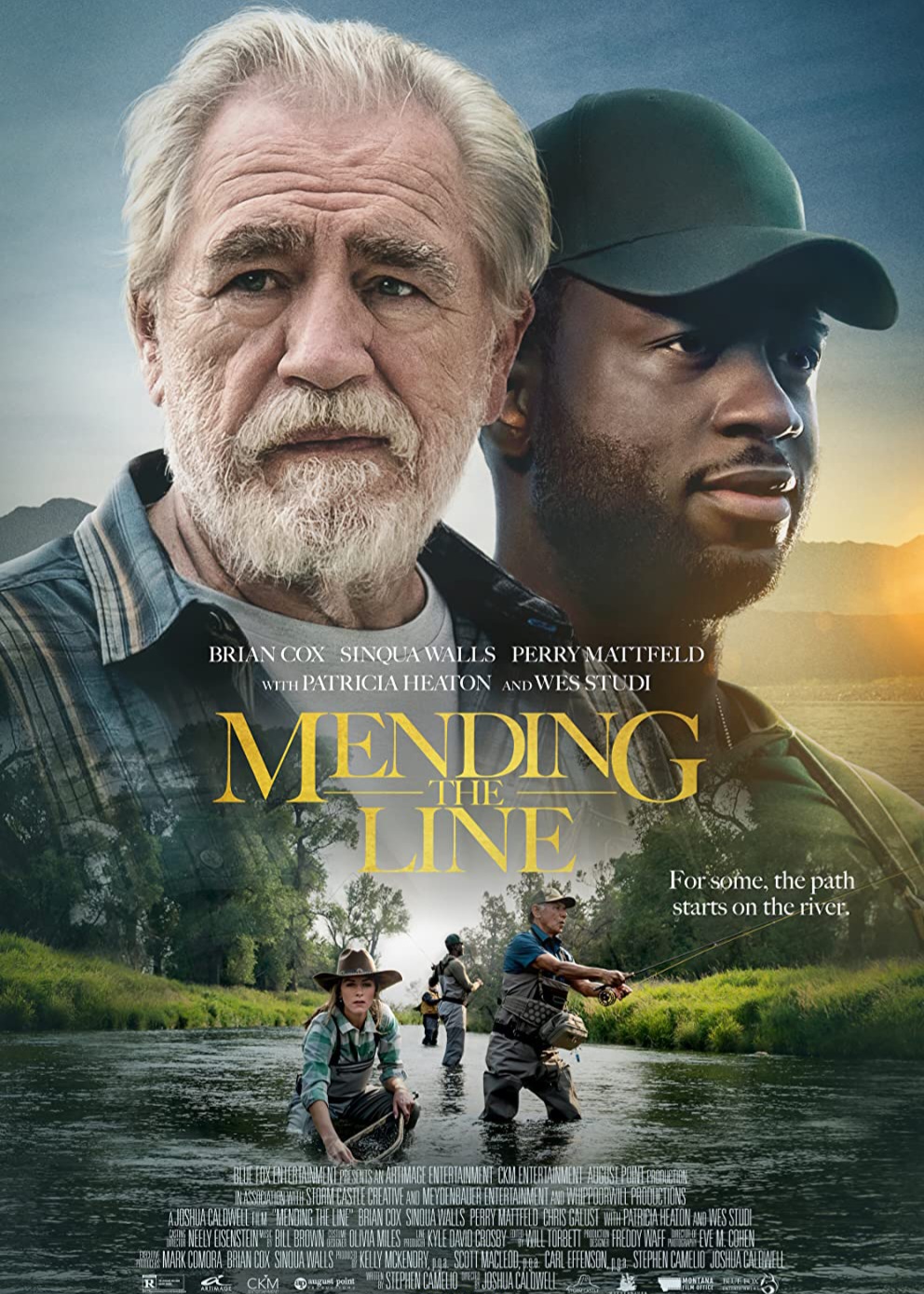
New fly fishing film premieres this weekend
The film has not received as much fanfare as the 1992 film, A River Runs Through It, directed by Robert Redford and starring Brad Pitt in his first major role. THE MOVIE, as it's sometimes referred to, sparked a surge of interest in fly fishing that lasted for 8 years. After which a steady decline in the sport took place until 2010. Since 2010, fly fishing participation in the USA has increased to the point where we have the largest number of fly anglers in nearly 60 years (8.1 million).
Some believe the current trend began with the release of another fly fishing movie, Salmon Fishing in the Yemen. Much less heralded than "River Runs", the romantic drama (and sometimes funny) film became a cult classic with a younger audience. Most of the showings were in college towns and college campuses. Starring Ewan McGregor and Emily Blunt, "Salmon" also received 3 Golden Globe nominations.
So will "Mending the Line" bring another surge in new folks to our sport? Perhaps. But perhaps the films message will be more important... that fly fishing can be a means of isolating the difficulties of life and establishing new friends and relationships.
As of now, only 2 theatres in Louisiana will have showings beginning this weekend. AMC Elmwood Palace 20 (Harahan) and AMC Westbank Palace 16 (Harvey).
Tuesday, May 30, 2023
Orvis BR announces June Fly Fishing 101 classes
Orvis offers "Fly Fishing 101" classes through their stores. FF101 is a one-day, 2.5 hour clinic designed to introduce the basics of fly fishing and fly casting. It includes hands-on rigging and casting instruction. It's perfect for beginners of all ages (under 16 must be accompanied by an adult). There is NO cost, but pre-registration is required as class size is limited.
The Orvis store in Baton Rouge just announced three sessions:
- June 3rd
- June 10th
- June 17th
For more info, or to register, call (225) 757-7286.
Sunday, May 28, 2023
Review: Lamson Velocity 7-weight fly rod
And boy, did I need some uplifting in my life. Ten days ago, I woke up from a short nap to a sharp pain radiating over my right abdomen. I felt pretty certain it was a kidneystone, having had one for the first time just 14 months ago. My wife took me to the ER, where the diagnosis was confirmed. I was prescribed pain meds and told to see if it would pass over the weekend.
Well it didn't pass. And sometimes bad things can happen if you allow them to linger. A checkup on Monday revealed that my kidney was slightly swollen. So early Tuesday morning, I underwent something called "Lazer Lithotripsy". Rather than describe it, I suggest googling it. While this is considered a minimally invasive procedure, full recovery can take 2 to 4 weeks. During that time, body energy levels are low. Like taking a short walk can wear you out.
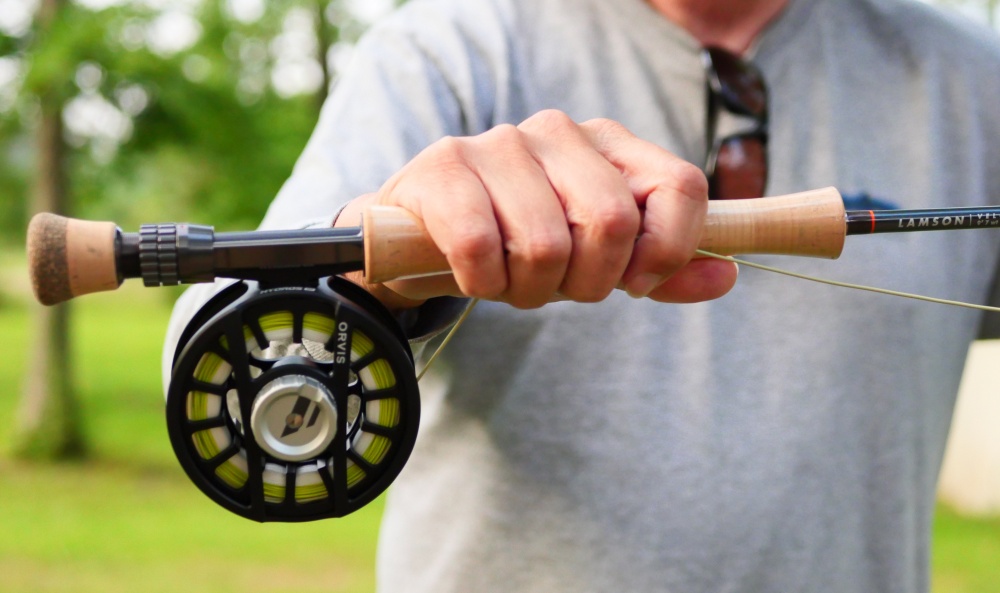
So here I was yesterday... feeling like Austin Powers after he lost his mojo. Donald Trump would describe me as a "low energy guy" and that would be optimistic. But then I heard the UPS truck pull up... I perked up and rushed outside. It was Summer Santa bringing me a brand new Lamson Velocity 7-weight fly rod, purchased from No Wake Outfitters in Metairie.
Some background here. At the New Orleans Fly Fishers annual Rio Rodeo in September, Tom Jindra told me of a new fly rod he thought I'd be excited about. Tom is a longtime friend and former president of Fly Fishers International, past chairman of the FFI's Casting Board of Directors, and someone long involved in the fly tackle industry. He now reps for several brands. As with all reps, I tend to temper any such enthusiasm for new products.
But a few months later, at the NOFF biennial expo, I had the opportunity to test cast the Lamson Velocity - and I was blown away! This was one of the best casting rods I'd ever put in my hand. I had a need at the time for a new 7-weight rod for bass fishing. But the need never presented itself... this has been a really bad Spring for me and fishing. Probably the fewest times I've fished in 40 years - and I live on a lake!
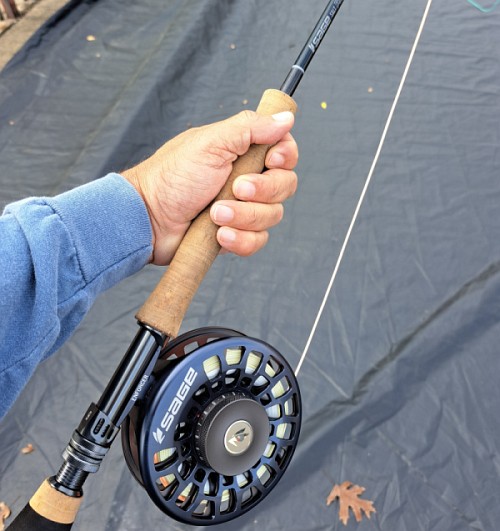
So for an early Father's Day present to myself, for putting up with pain and the lack of fishing time this year, I ordered the Velocity last week. When the package arrived, it took all of two minutes for me to setup. The paired reel was an Orvis Hydros I won in a gamblers draw at the FFI Gulf Coast Classic earlier in the month. The reel already had backing and an Orvis Pro Taper textured fly line (one of the best lines on the market and worth $120).
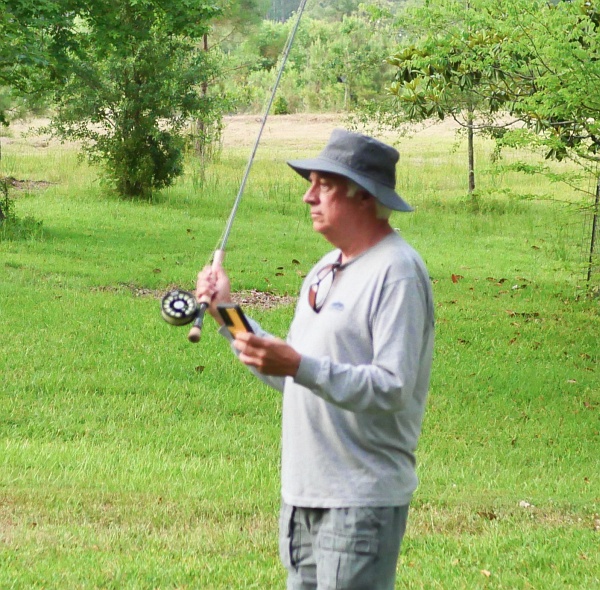
The only problem with the line was that it was a 6-weight. You'd think that might underpower a 7-weight on short casts (under 30 feet). WRONG! This combo casts like a dream. Whether the cast is 20 feet or 90 feet, everything was effortless. The rod balances with the reel so well, and there's little swing weight in the rod tip. After 30 minutes of casting - stopped short only because it was getting dark and mosquitos were joining the act - my impression was that this might be one of the very best rods I've ever owned!
So here's how Lamson describes the Velocity: These rods have a fast action and can punch tight loops into windy situations. The high modulus graphite gives a lightweight feel with enough power to throw large flies, cast heavy lines, and quickly fight the lunkers. The 7 and 8-weight models feature anodized aluminum seats with full wells grip and composite fighting butts. The flat-faced Lockdown Reel Seat is designed to ensure consistent locking of your reel and no rotational movement after a long day on the water. Velocity rods come with a tough cordura rod tube and rod sock, and lifetime warranty for defects. MSRP is $469. Repairs caused by misuse can be done for $50. Lamson offers a 2 week turnaround on repairs.
My thoughts on what Lamson says: I'd describe the action as slightly moderate than pure fast. As mentioned, it loads perfectly well at all ranges. That lockdown reel seat is one many of us rodbuilders are now using, and it's the cat's meow! As for price, at $469 it's in the lower end of the mid-priced rod range, nearly $100 less than our previous favorite, the Orvis Recon.
So the bass have had it easy this Spring without me around much to terrorize them. I've also missed out on several kayak bass tournaments. Those days are numbered! Pretty soon, I'm going to attack the baskeens with a new weapon that will produce hundreds of sore lips. For now, the doctor says rest. I can patiently wait.
Tuesday, May 09, 2023
LDWF reports results of red drum survey
At the May meeting of the Commission, Adriance followed up with more details of the assessment as well as results of a public survey conducted among licensed anglers.
Stepping back for a moment, lets understand what's happening. The reasons for redfish decline are much like those for the decline of speckled trout:
- loss of habitat (especially diverse habitat)
- decline of forage (yep, menhaden again)
- increased fishing pressure
Regarding the latter, it should be noted that the current regulations ( 5 fish per day, 16 to 27 inches only, with one exception over 27 inches) were established 34 years ago in 1988. The numbers of saltwater anglers in the state, the amount of fishing effort, and the expertise and technology to improve fishing success have all increased dramatically since then.
Red drum are unique in that the vast majority of harvest are juvenile fish. These immature fish are typically under 4 to 5 years of age, under 27 inches in length, and under 10 pounds in weight. When a redfish reaches 4 to 5 years of age, it usually migrates to nearshore or offshore waters to join the spawning population. To protect these spawning stocks, recreational harvest of mature redfish in federal waters is not allowed and severely limited in state waters. Current regulations for Louisiana are 5 fish per day, 16 to 27 inches only, with one exception over 27 inches.
At the January meeting, LDWF biologists offered a wide range of scenarios to bring both juvenile escapement and the spawning potential recruitment (SPR) back above the conservation standard. To accomplish this, the very minimum in harvest reduction would have to be 35 percent. Scenarios for 10, 20, 30, 40 and 50 percent reduction were presented. These findings and scenarios were then presented in a polling of saltwater anglers to learn what management changes would be most acceptable.
The Fly Fishers International (FFI) Gulf Coast Council (GCC) is actively engaged with LDWF biologists in results of the poll, with the idea of coming up with a recommendation to the Commission for new regulations. The GCC has stated they would like a 40 percent (or more) in harvest reduction, but with a plan that most anglers could support.
CCA Louisiana is also involved in this issue, and they've stated that the very first step should be to eliminate the oversize slot allotment. That alone would result in an average 10 percent reduction in harvest.
What the poll results indicated is that most Louisiana saltwater anglers prefer to keep the smaller sized reds - typically 18" to 24" - compared to the larger slot sizes. That too would elevate the harvest reduction. There was strong support for reducing the daily harvest to 3 fish, but anything less than that was not well received.
We'll continue to track this issue as it unfolds.
Monday, March 13, 2023
Review: Olde Fly Shop 1-weight fly rod
The shop is owned by Brian and Peggy Barnes. Originally from England, the pair relocated after vacationing in south Florida. I knew of their store from my good friend and fellow rod building enthusiast, Roger Breedlove. Roger has ordered blanks from Brian on several occasions and raved about their value.
However it was at the Atlanta Fly Fishing Show in February that I conversed with them for the first time. They were selling their line of finished rods and as is my ritual, I tested a few models. All cast very well, especially considering the price ($220-$260). But one particular model grabbed my attention - a 6 foot, 6 inch 1-weight four piece. For convenience, I'll refer to this as the "661".
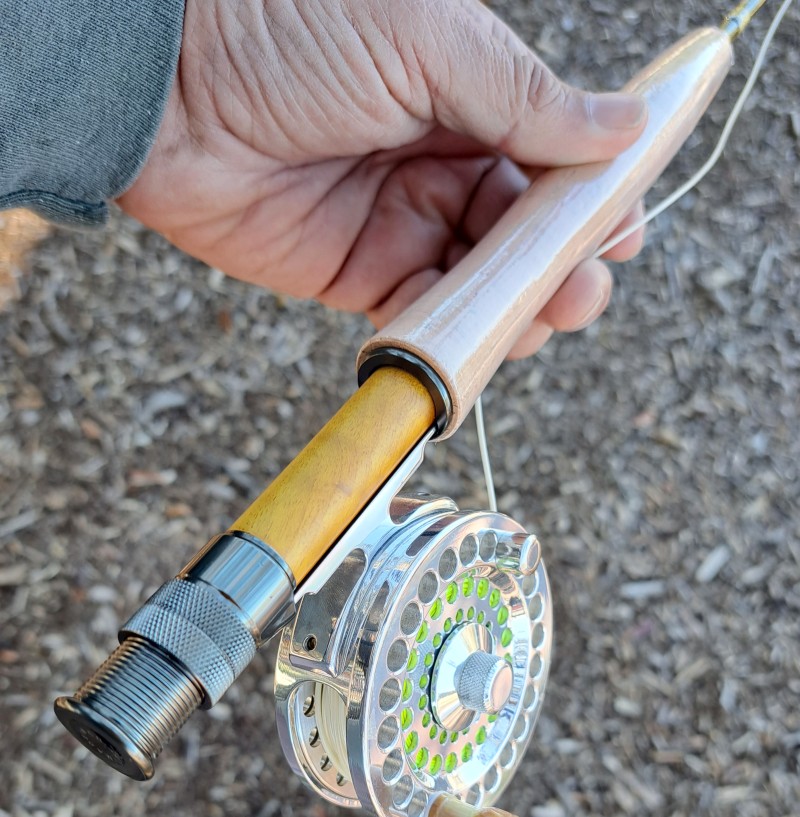
The detail on the 661 defies it's price. The cork grip is listed at AAAA grade, and unlike some makers who claim 4A grade, this cork truly is clean. The blank is IM8 graphite and it's ultra light in the hand and dampening is immediate. The blank has a lovely green finish, the burled wood reel seat is complemented by high-grade fittings, and the ferrules are marked not only with the guide alignment but with the model length and weight. It comes with a rod bag and a cordura-covered carrying case. According to Brian, their rods come with a replacement option if broken.
After testing for 10 minutes at the AFF Show casting pool, I knew I wanted this rod. While I have a 1-weight and a pair of 2-weight rods, they are all two piece. The idea of having a short, 4-piece rod that I could carry on flights was appealing enough. But in testing, I found this rod to be quite amazing. And not to mention what a beautiful rod it was as well! And then there was the show discount - I picked it up for $180.
Back home, I didn't put it to the CCS test... don't really do that anymore since moving to central Louisiana. I simply take various weights of fly lines I have on several reels, and use each one to determine what weight line works best. While this rod can certainly cast a 1-weight, it worked much better with a Triangle Taper 2-weight line as well as a Mastery Trout 3-weight line. A couple of 4-weight lines overloaded this rod and even with short amount of line out, I was throwing tailing loops. So I'd say this is a 2-weight rod, not a 1-weight. But that's okay because it serves the same purpose.
Paired with a custom-made machined reel, this baby balanced perfectly in the hand. I did the usual test of casting short to mid-range to long range. It performed excellent at all distances, with the maximum distance being 84 feet! Yes, that required a double haul but it's still impressive. The 90-degree PULD cast delivered almost perfect efficiency... I suspect the IM8 blank made this possible. In my experience, IM8 is better for directional changes than the industry standard IM6 blanks often found at this price point.
Overall, this rod gets a 9.5 out of 10. The only deduction being that it's really a 2-weight. But if you're looking for a rod for ponds, small creeks, or to make casts under limbs or other cover, or just one to have fun with small panfish, the Olde Fly Shop 661 should be at the top of your list.
Monday, March 06, 2023
Gulf Coast Classic website now up
Friday-Saturday, May 5-6, 2023
Gulf State Park – Learning Campus
Gulf Shores, Alabama
Website: www.ffigulfcoastclassic.com
The Gulf Coast Council of Fly Fishers International has announced that their inaugural Gulf Coast Classic fly fishing festival now has its own website. On the website are complete details about the event including: admissions, schedule, sponsors, exhibitors, workshops, demonstration fly tiers, speakers and instructors, the Fly Fishing Film Tour (F3T) taking place Saturday evening, the Classic Mixed Bag fishing contest, a map of the Learning Campus, and much more!
There are special opportunities for volunteers, demo fly tiers, speakers and instructors. Registration will be live shortly and details for those interested in making our event a success will be detailed in emails to GCC members and others who have contacted us with interest.
Again, bookmark the Classic site at www.ffigulfcoastclassic.com and visit often as updates will be posted routinely.
Wednesday, February 15, 2023
Make plans for Red Stick Day on March 4th
28th annual Red Stick Day fly fishing festival
Saturday, March 4, 2023
8:30am to 3:00pm
LDWF Waddill Outdoor Education Center
4141 North Flannery Rd, Baton Rouge, LA
Hosted by the Red Stick Fly Fishers of Baton Rouge, Red Stick Day is one of the longest-running fly fishing festivals in the South. There's seminars, fly tying demonstrations, casting instruction, food, loads of raffle items, and more. And best of all, admission is free!
The event will again be held at the LDWF Waddill Outdoors Education Center off North Flannery Road. The ponds on the premises are full of big bass and bluegill. In addition, Masseys Outfitters will be on hand with a variety of kayaks from Hobie, Native and other brands for folks to test paddle/pedal.
This year, thanks to the FFI Gulf Coast Council, the headliners will include three of the nation's top casting instructors: Dave Barron of Wisconsin, Jeff Ferguson from Lafayette, and Jonathon Walter of Colorado. All three are also members of the FFI Casting Board of Governors. If you've ever wanted to learn more about any type of casting, or improve your casting skills, this is a grand opportunity to learn from the best! Also on the agenda are programs by Brian Roberts and Dave Barron.
Over a dozen of the region's top fly tiers will also be on hand to demonstrate their various flies, along with their favorite legacy patterns. There's also a giant raffle and silent auction featuring one-of-a-kind items, all to benefit the club's educational projects.
Details about the event, including speaker and tier bios, schedule of activities, and more can be found by going to www.rsff.org and clicking on "Red Stick Day" in the menu.
Monday, January 16, 2023
Review: Sage R8 saltwater fly rod
What made the Maverick so special was that, like it's chief competitor the Orvis Recon 2, the Mav delivered performance at all levels of casting. A trait often found in premium rods, but at half the price.
As I've stated for over 25 years, on this website and in my Louisiana Sportsman column, you don't need a premium saltwater rod for fishing the Louisiana marsh. Making a 100+ foot cast on target is not necessary when 90 percent of the targets can be approached within 20-60 feet. But you DO NEED a rod that is very accurate and casts efficiently at all ranges, has low swing weight, and has the power to move a big fish.
In December, at the annual Fishing Tackle Unlimited Expo in Houston, I had the opportunity to test cast the new Sage R8 - the replacement for the Salt HD. This rod just became available this week in retailers everywhere. Like nearly all premium fly rods these days, the price tag is over $1,000.
Sage advertises that the R8 uses their new R8 graphite, which adds 25 percent more strength per weight, more durability, and more power when needed. As I've said many times, the recent advances in nano-resins allow rod designers to use more advanced, lighter graphites that otherwise might be too brittle or not suitable for fishing rods. Sage also claims the R8 has better casting accuracy at all distances, and greater distance when needed than the Salt HD.
In my testing, I found all this to be true. The test where I hit an aluminum can at 40 feet, than in one false cast, hit a can 60 degrees to the right but at 50 feet, was as good a result as I've seen in any rod ever tested. For the distance cast, I boomed out over 100 feet easily and very much in straight line... consistently "tagging" a white SUV in the distance. Loops were nice and super tight. I found near zero reverberation on the shake test. There is simply nothing this rod can't do well!
Little things matter as well. The reel seat was firm and tight. And at a time when rod manufacturers are putting shorter cork grips on their rods, WHAT A JOY it is to have a nice long grip. You truly appreciate this when casting for hours... your hand will thank you!
So why spend over one grand on a fly rod? First, there may be a few times when wind and distance to a redfish may require that extra power in your cast. But second, if you travel to fish, there are species and locales where an accurate 100+ foot cast is a necessity. I can't tell all the number of times in my early fly years when that bonefish, permit or tarpon was right at the 80-100 foot range and my cast was only 70 feet. Becoming a better caster (which I did) certainly helped. But you can be a world-class flycaster and still fail unless you've got a really good weapon. That's why I have two premium saltwater rods in my arsenal.
I love my Sage Xi3. Would I replace it with a Sage R8? Don't think so, but it's not because the R8 is the lesser rod. In fact, after testing, the R8 might be the best saltwater rod I've ever cast. To learn more about the R8, go to www.sageflyfish.com.
As always, click on the images for a larger view.
Tuesday, January 03, 2023
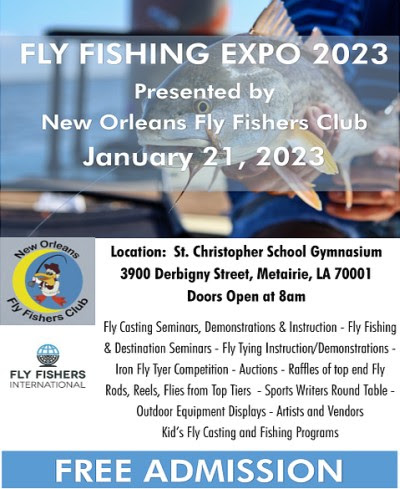
NOFFC releases Expo flyer
2023 New Orleans Fly Fishing Expo
Saturday, January 21st
8:00am to 3:30pm
St. Christopher the Martyr School Gymnasium
3900 Derbigny St, Metairie, LA
Free admission!
For a full size Expo Flyer, CLICK HERE
Hosted by the New Orleans Fly Fishers Club, this biennial event (every odd year) is a celebration of fly fishing, featuring all aspects of our sport. Whether you’re wanting to get into fly fishing, or a seasoned veteran, there’s a program or activity certainly to be of interest.
Activities will include fly casting seminars and demonstrations, fly tying instruction and demos, seminars and destination seminars, Sports Writers Roundtable, Iron Fly Tyer competition, auctions and raffles of top end products and flies, artists and vendors, and Kids Fly Fishing Casting and programs. Proceeds go to benefit the club’s educational and philantrophic initiatives.
In preparation for the biennial expo, NOFFC has unveiled a new website. The domain remains the same, but there’s new content. Webmaster Wayne Schnell is still putting the final pieces together, but in addition to the latest club news and a more detailed “Calendar of Events”, the site will also include articles of interest to all fly anglers. Check it out at www.neworleansflyfishers.com.
Wednesday, December 21, 2022
Merry Christmas, Happy Hanukkah, and Happy New Year!
So here's wishing our readers and friends a Happy Hanukkah, and a most blessed Christmas! Hope everyone finds something under the Christmas tree they can use for their piscatorial pursuits in the coming year. The new year brings a number of regional events to look forward to starting in January. This unusually cold weather will slow the fishing down for awhile. But as soon as it warms up, expect some excellent marsh action for reds and specks. And some good freshwater action for crappie and chain pickeral on fly.
Tuesday, December 20, 2022
It's Rainbeaux Trout time!
Usually at the time of the BREC stocking, there's the stocking of trout in the Lamar-Dixon pond in Ascension Parish, also managed by the local recreation agency.
In early January, LDWF stocks almost 20 ponds across the state as part of it's "Get Out and Fish!" community fishing program. Each location has a fishing tournament in conjunction with the stocking. Locations are announced on the LDWF website as well as their Facebook page. The daily limit is four (4) per person.
Rainbow trout are native to rivers and lakes in western North America, but have been stocked in coldwater environments across the globe. In winter, several states stock in community ponds to give anglers an opportunity to catch an active fish when warmwater species are mostly dormant. These fish die off once water temperatures exceed 70 degrees. In Louisiana, depending on pond location and depth, that could be anytime between mid-March and mid-April. However, few if any trout remain in these ponds by March due to angler harvest and "death from above" (eagles and ospreys).
Thursday, December 15, 2022
NOFFC has new website, releases Expo flyer
In preparation for the biennial expo, NOFFC has unveiled a new website. The domain remains the same, but there's new content. Webmaster Wayne Schnell is still putting the final pieces together, but in addition to the latest club news and a more detailed "Calendar of Events", the site will also include articles of interest to all fly anglers. Check it out at www.neworleansflyfishers.com.
Speaking of the Expo... the 2023 New Orleans Fly Fishing Expo is just weeks away, set for Saturday, January 21st. It will take place at St. Christopher School Gymnasium in Metairie. Activities will include fly casting seminars and demonstrations, fly tying instruction and demonstrations, seminars and destination seminars, Sports Writers Roundtable, Iron Fly Tyer competition, auctions and raffles of top end products and flies, artists and vendors, and Kids Fly Fishing Casting and programs. Best of all, the event is FREE and open to the public.
For a full size version of the poster, CLICK HERE.
Thursday, December 08, 2022
Latest redfish report calls for stricter regulations
At last Thursday’s monthly meeting of the Louisiana Wildlife and Fisheries Commission (LWFC), LDWF marine fisheries biologist Jason Adriance gave the most recent assessment on red drum stocks in the state. The report summarized that, while spawning stocks of redfish are still above the conservation standard, the number has been declining since 2005 as fewer redfish escape to spawning size. And unless management changes are initiated soon, we could see a situation where the fishery is unsustainable.
Red drum are unique in that the vast majority of harvest are juvenile fish. These immature fish are typically under 4 to 5 years of age, under 27 inches in length, and under 10 pounds in weight. When a redfish reaches 4 to 5 years of age, it usually migrates to nearshore or offshore waters to join the spawning population. To protect these spawning stocks, recreational harvest of mature redfish in federal waters is not allowed and severely limited in state waters. Current regulations for Louisiana are 5 fish per day, 16 to 27 inches only, with one exception over 27 inches.
By far, redfish are the most popular species among saltwater fly fishermen. Louisiana has been described in numerous publications as the “Redfish Capitol of the World” and supports at least a few dozen flyfishing charter services that put clients on fish in shallow water for a sightcasting experience found only in a few places (mainly Texas and South Carolina).
For veteran redfish anglers, the assessment came as no surprise. There’s been loads of anecdotal evidence to support that fishing for reds “ain’t what it used to be”. Coming just months after an assessment on spotted seatrout (specks) that indicated management changes were needed for that species as well.
Among the reasons given for redfish decline were much the same as for speckled trout decline. Those include: loss of habitat (especially diverse habitat), decline of available forage (yep, that menhaden issue again), and increased fishing pressure. Regarding the latter, it should be noted that the current regulations ( 5 fish per day, 16 to 27 inches only, with one exception over 27 inches) were established 34 years ago in 1988. The numbers of saltwater anglers in the state, the amount of fishing effort, and the expertise and technology to improve fishing success have all increased dramatically since then.
Management thresholds for red drum have been established by the Gulf of Mexico Fishery Management Council (GMFMC). For Louisiana, the conservation standard is a 20 percent spawning potential ratio, based on a 30 percent escapement rate. While currently we have a 40 percent SPR, the escapement rate estimate is 20 percent. And because there is a time lag between escapement and recruitment, this means we’ll likely see a further decline in fishing for a few years until any restrictive measures kick in.Adriance and his team also provided the Commission with numerous scenarios for management changes to get red drum back above the conservation standards. These came in the form of tables and graphs with different harvest numbers, slot sizes, and retaining or removing the one-exception over the maximum slot size.
To review the management scenarios on the LDWF website, CLICK HERE.
There are two proposals that are gaining momentum, both of which would bring the escapement rate to about 40 percent - above the conservation standard. Both would increase the minimum slot size limit from 16 to 18 inches, retain the maximum slot size at 27 inches, and decrease the daily creel limit from 5 fish to 3 fish. The first proposal would eliminate the "one fish over 27 inches per day" exception now in place, and would not allow ANY possession of red drum over 27 inches at any time. The second proposal would give every saltwater license holder two (2) annual tags to keep a redfish over 27 inches.
Meanwhile, CCA Louisiana and the Fly Fishers International (FFI) Gulf Coast Council (GCC) are having separate discussions about proposals to be brought to the LWF Commission. It's almost a certainty that each organization will propose a plan that brings escapement back to at least 30 percent, if not higher.
|
|